
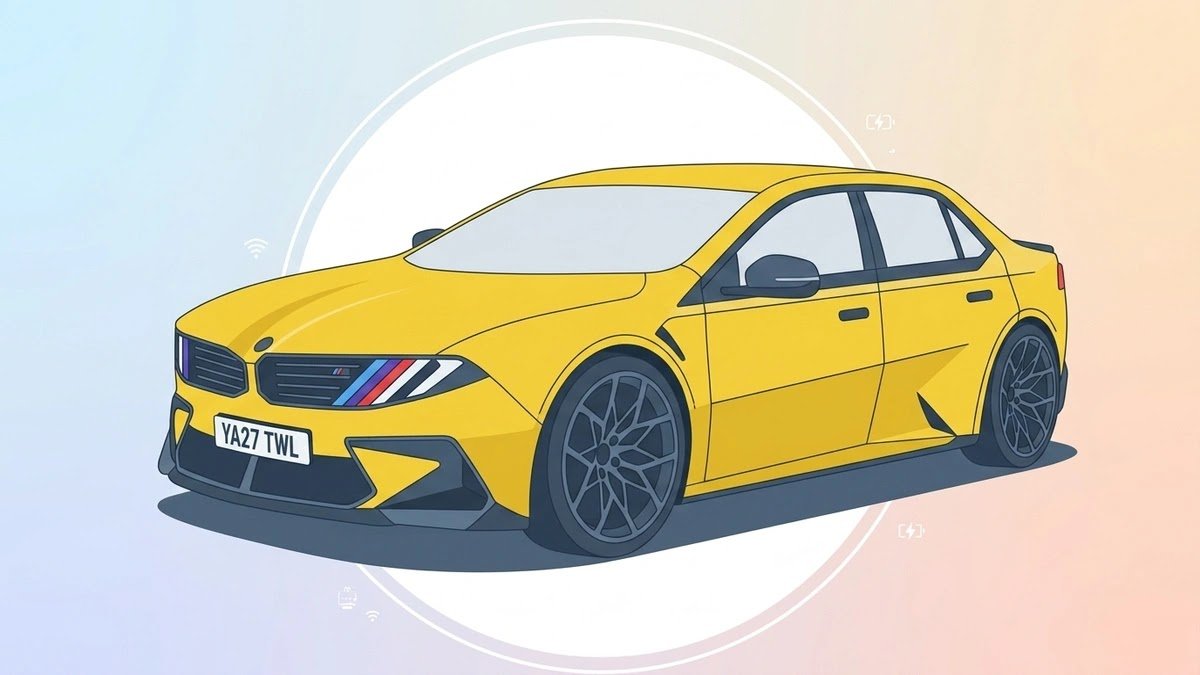
BMW M has confirmed how its first fully electric high-performance cars will be driven, and the answer is four electric motors — one at each wheel. Production begins in 2027 on the Neue Klasse architecture. What BMW has not done, eight months after the announcement, is say which car it is.
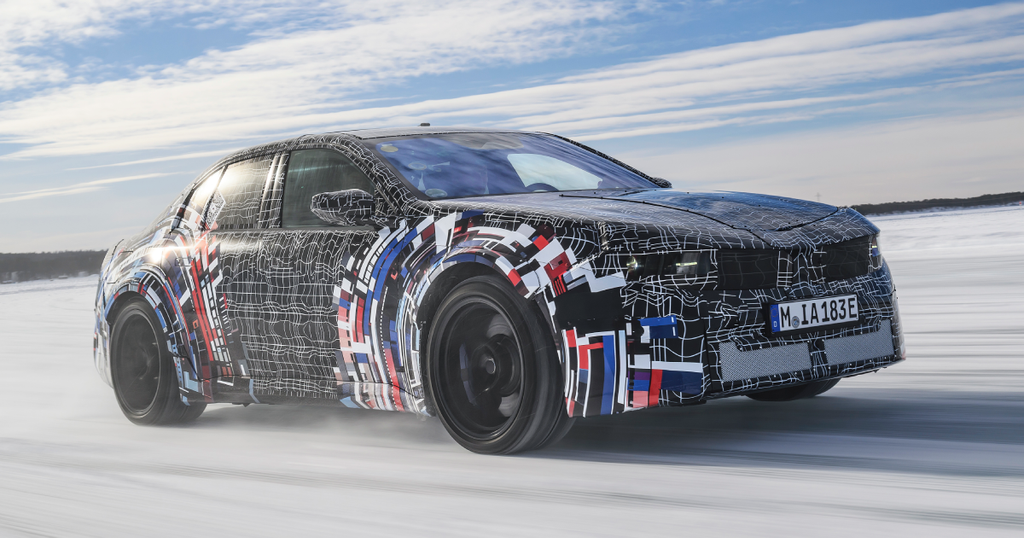
What BMW actually confirmed
The system is called BMW M eDrive. Two drive units, front and rear, each containing two motors arranged in parallel, giving one motor per wheel and no differentials anywhere in the car. Torque at each wheel is set individually by software rather than by mechanical linkages, under a system BMW calls M Dynamic Performance Control, which runs on the same central control unit — nicknamed Heart of Joy — that BMW is putting across the Neue Klasse range.
The front axle can be decoupled completely. That gives two things at once: a rear-wheel-drive mode for drivers who want the car to behave the way an M car traditionally does, and lower losses on a motorway run, where turning the front motors off is simply more efficient.
Underneath sits a battery of more than 100 kWh usable capacity, built on the sixth-generation cylindrical cells, running an 800-volt system. BMW also claims the highest recuperation figures of any car it makes, with braking split continuously between the friction brakes and the motors.
What it did not confirm
No model name. No power output. No range figure. No price. No 0–100 time. The announcement describes a drivetrain and a timeline, and everything beyond that is inference — including the widespread assumption that the first car is an electric M3, which comes from the M Concept Neue Klasse shown alongside it rather than from anything BMW stated.
It is also worth reading “from 2027” precisely. That is when production starts. Cars reaching customers, in volume, in a given market, is a later date again, and concept-stage specifications have a long history of moving before a car is homologated.
The part that matters outside the M showroom
The 800-volt architecture is the detail with consequences beyond this one car. An 800-volt pack charges fastest on a charger that can actually deliver 800 volts; on an older 400-volt DC unit the car has to run a converter or accept a lower rate, and the headline charging figure quietly disappears. If you are buying a car on the strength of a charging number, the number belongs to a pairing of car and charger, not to the car alone.
The second consequence is more mundane. A car with four motors and torque assigned by software has no mechanical differential to inspect, and its handling behaviour is a firmware property. That is a different ownership proposition from a car whose behaviour is set by hardware, and it puts the update policy — how long, and on what terms, the manufacturer keeps improving it — into the same conversation as the warranty.
How to check this yourself
BMW publishes its announcements in full on its press site, and the technical claims above come from there rather than from coverage of it. When a specification is quoted anywhere for a car that is not yet in production, it is worth finding whether it came from the manufacturer’s release, from a concept car, or from an interview — the three are routinely mixed together, and only the first is binding on anybody.
Source: BMW Group PressClub, The beginning of a new era: fully electric BMW M models, published January 2026. Quoted figures are BMW’s own; nothing here has been independently measured.