
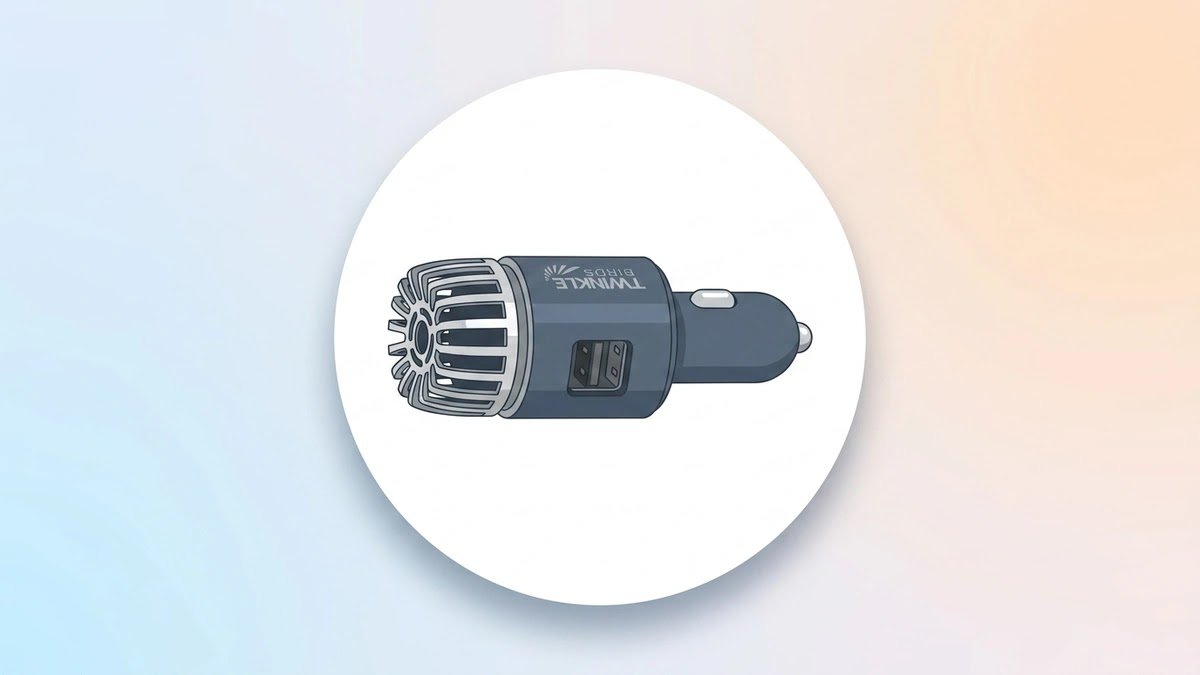
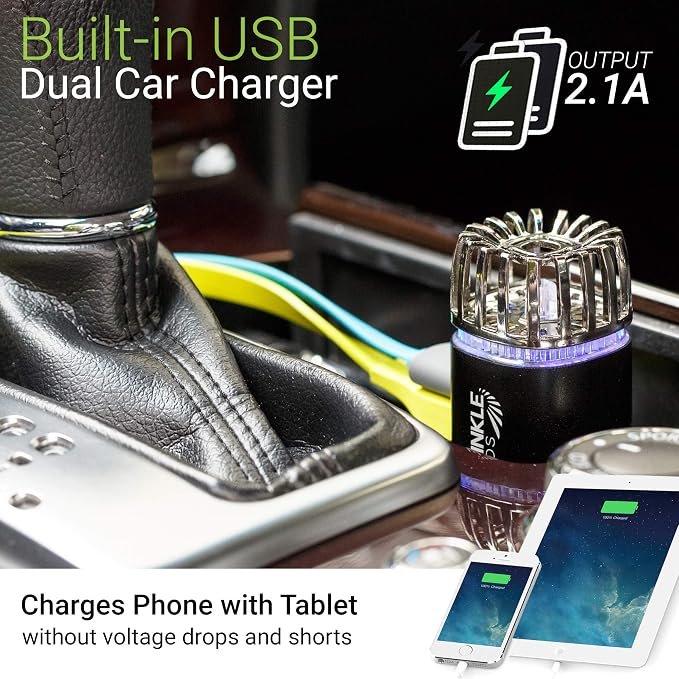
Yakry, a brand better known for reversing cameras, sells a small vent-clip device listed as the Yakry Mini Car Air Purifier — and, in a second listing of the same product, as an Ionizer. The description is unusually candid about what is inside it: 100 per cent filterless, using what the listing calls dual-action bipolar plasma, USB powered, aimed at smoke and pet odour.
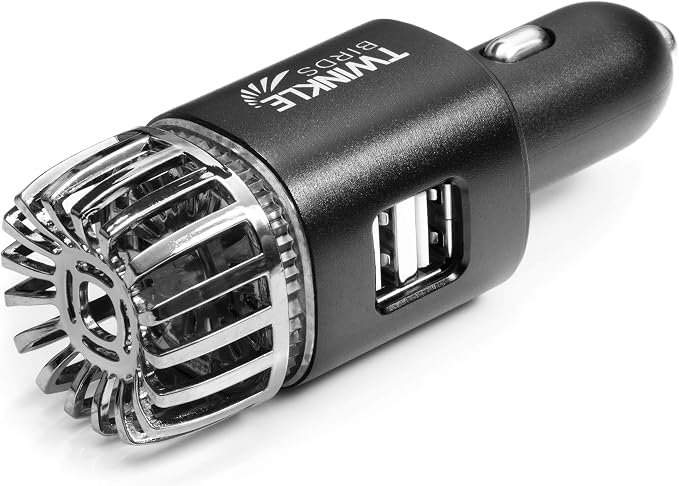
That one word — filterless — determines everything else about what this device can and cannot do, and it is worth understanding before you spend anything, on this or on the dozens of near-identical units sold under other names.
No filter means no particles
A filter cleans air by trapping matter in a physical medium. Take the filter away and there is nothing to trap anything in. An ioniser works differently: it charges particles so they clump together and fall onto surfaces, and it drives chemical reactions that alter odour molecules.
The US Environmental Protection Agency, reviewing this class of device, found ion generators “less effective in removing particles of dust, tobacco smoke, pollen or fungal spores than either high efficiency particle filters”. So if your reason for buying is pollen season, dust on a gravel road, or the fine particulate that comes through the vents in traffic, this is not the device that addresses it — and no amount of plasma branding changes that. What addresses it is the filter your car already has, which we cover in cabin filter versus portable purifier.
There is also a detail people miss: particles an ioniser drops out of the air have not left the car. They are on the dashboard, the screen and the seats.
Odour is the actual use case — and the evidence is thinner than the marketing
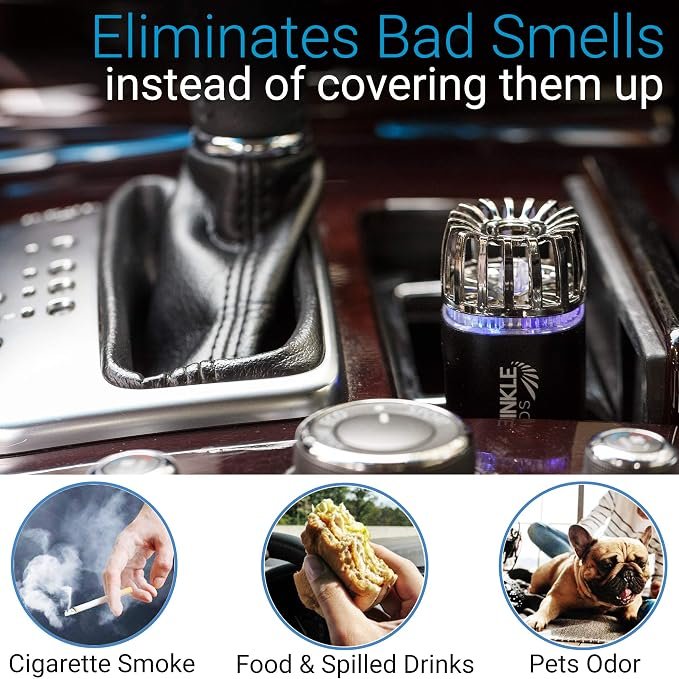
Judged as a deodoriser rather than a purifier, the device is at least aimed at the right target. But the EPA’s assessment of the underlying chemistry is blunt: ozone, the reactive species these devices rely on, “is not effective at removing many odor-causing chemicals”, and against formaldehyde specifically it “showed no effect”.
Worse, the reactions are not always subtractive. The EPA notes that ozone reacting with indoor chemicals produces “aldehydes, formic acid” and other irritating by-products, and cites a case where reacting with new carpet raised the total concentration of organic chemicals in the air rather than lowering it. A device that changes the smell has not necessarily improved the air.
The ozone question, stated precisely
To be fair to this product: we have not measured it, and we are not claiming it emits a dangerous amount of anything. What we can say is that devices which ionise air can produce ozone as a by-product, and that regulators treat this as a real rather than theoretical risk.
California is the clearest example. Its air cleaner regulation covers any device used in an occupied enclosed space — ionisers and electrostatic units explicitly included — and certification is mandatory: only compliant devices may be sold there, online sellers included. The limit is an emission concentration below 0.050 ppm of ozone, and certified products must carry an “ARB Certified” marking. CARB publishes the list of certified devices for anyone to check.
A car is a very small enclosed space, considerably smaller than the rooms these rules were written for.
Four checks before buying any ionising purifier
1. Look for the certification. Check the CARB list, or look for “ARB Certified” on the packaging. This applies to any brand, not this one in particular, and it is the only independent signal available at the point of sale.
2. Look for a stated ozone output. Manufacturers confident about the number publish it. Its absence is not proof of anything, but it is information.
3. Treat “99.9 per cent” as marketing until it names a standard. A removal figure means nothing without the test standard, the chamber volume and the run time. A chamber the size of a shoebox over eight hours can produce impressive percentages that say nothing about your car on a twenty-minute commute.
4. Ask where the removed matter goes. With a filter you can answer that by holding it. With a filterless device you cannot.
What actually fixes a smelly car
In order of effectiveness per unit of money: replace the cabin air filter, which on most cars is a ten-minute job behind the glovebox and costs less than most of these gadgets; find and remove the source, because an odour is nearly always damp carpet, a spill under a seat or a blocked drain rather than air that needs treating; ventilate properly; and only then consider a device. Our guide to getting rid of car odours goes through that sequence, and how car air purifiers work covers what a filtered unit does differently.
If, after all that, you want a small vent-clip deodoriser and you understand that you are buying an odour treatment rather than an air cleaner, this class of device is inexpensive and unobtrusive. The mistake is buying one under the word “purifier” and expecting it to do what the filter in your dashboard is already doing.
Read next
Opens Amazon search results for the Yakry Mini Car Air Purifier. We do not currently earn a commission from this link.