
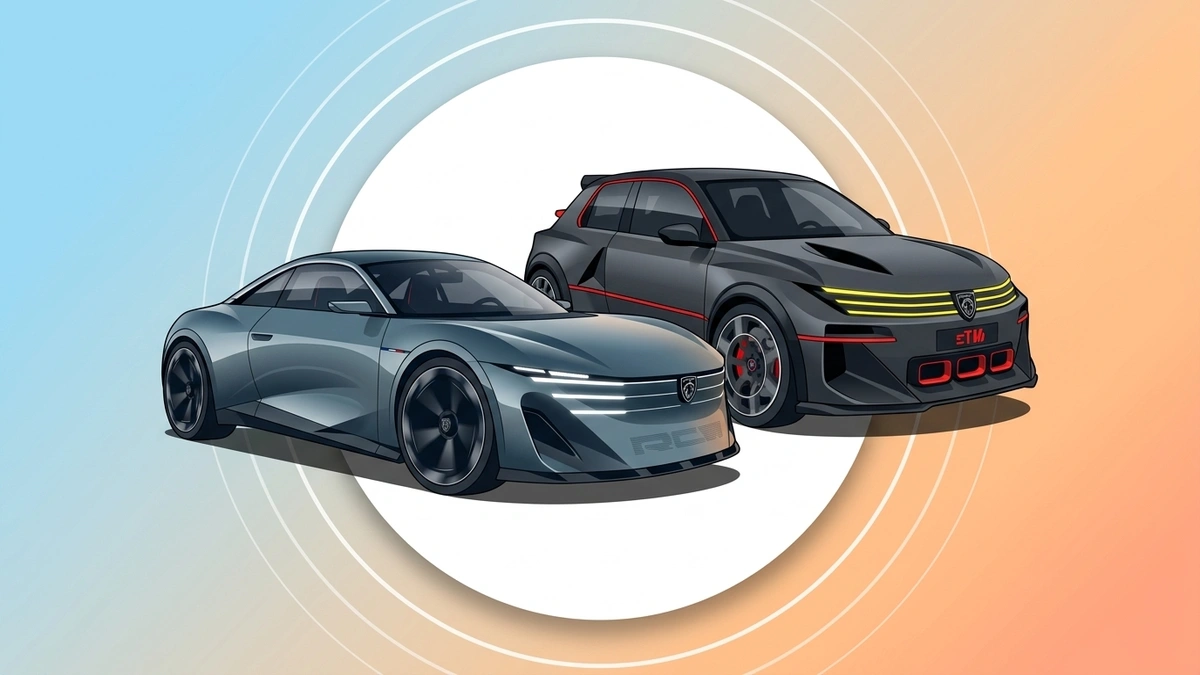
Peugeot used the Paris motor show, running 12 to 18 October, to bring back two cars nobody expected to see again: a tribute to a Group B rally legend, and the coupé it quietly killed in 2015. Both are concepts. Only one has a date attached.
E-T16: 816 horsepower, written three ways
The E-T16 marks forty years since the 205 Turbo 16 took back-to-back World Rally Championships in 1985 and 1986. Peugeot Sport built it: three motors — one front, two rear — an 85 kWh battery, 0 to 100 km/h in 2.5 seconds, 300 km/h flat out, 380 mm discs all round and a vertical hydraulic handbrake, which tells you what they had in mind. The useful detail is thermal: heat is pulled out through the sides of the cells rather than the base, which Peugeot says allows three consecutive Nordschleife laps with no power drop. Derating is what separates a fast EV from a fast car.
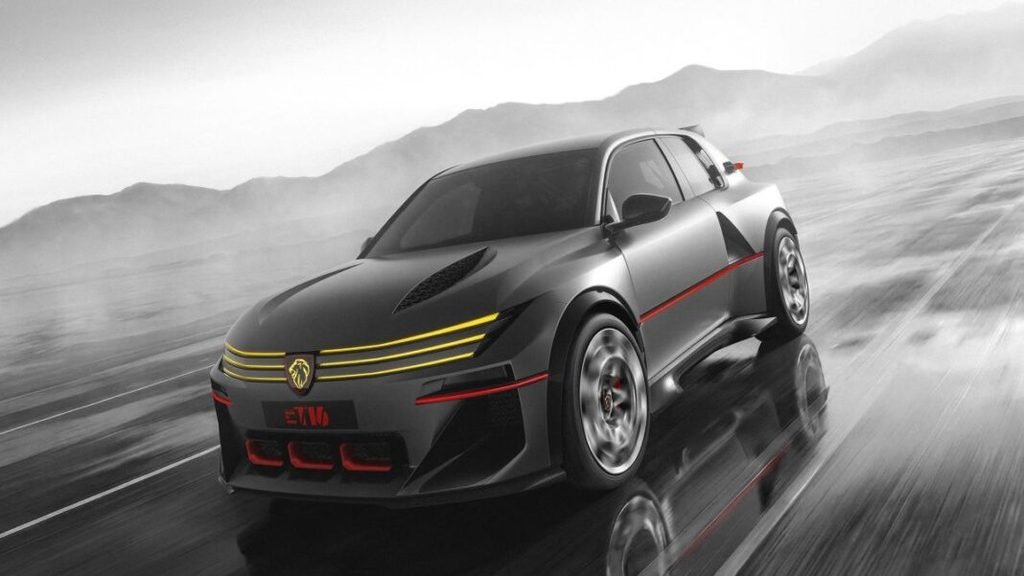
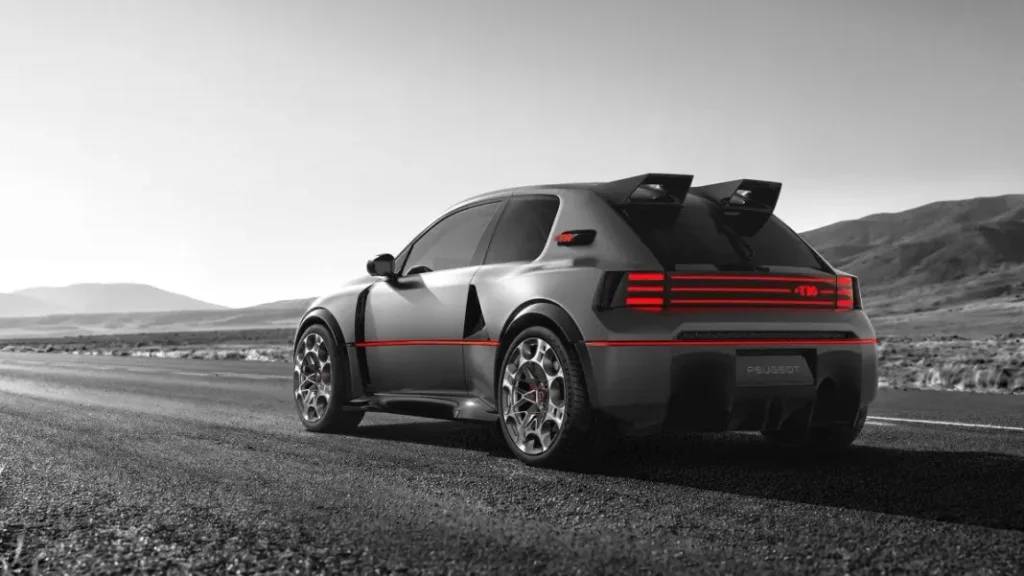
About that power figure — you will see 816, 815 and 805 in different reports, all describing the same car. Peugeot quotes 816 ch, metric horsepower. That is 600 kW, which converts to 805 bhp. Nothing changed but the unit, which is exactly what a spec sheet does to you when nobody says which one they started from. The three-motor layout, meanwhile, is the same software-assigns-torque argument BMW has already committed to for its electric M cars.
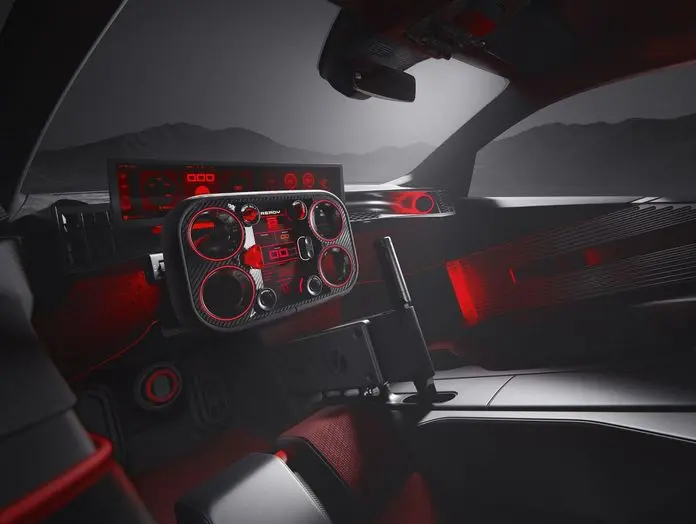
No production version has been promised. What Peugeot has confirmed is that the design and some of the hardware reach the next E-208 in 2027 — the horizontal three-claw lighting, the square Hypersquare wheel and steer-by-wire, with no mechanical link to the front axle. The “hyperhatch” is a segment of one. The real preview is a supermini.
RCZ Vision: the number that does not line up
The second premiere revives the 2009–2015 coupé. It claims 500 ch (493 bhp), a solid-state battery developed with Factorial Energy, a 1,000-volt architecture, 600 km of range, 11.5 kWh per 100 km and a 10 to 80 per cent charge in ten minutes.
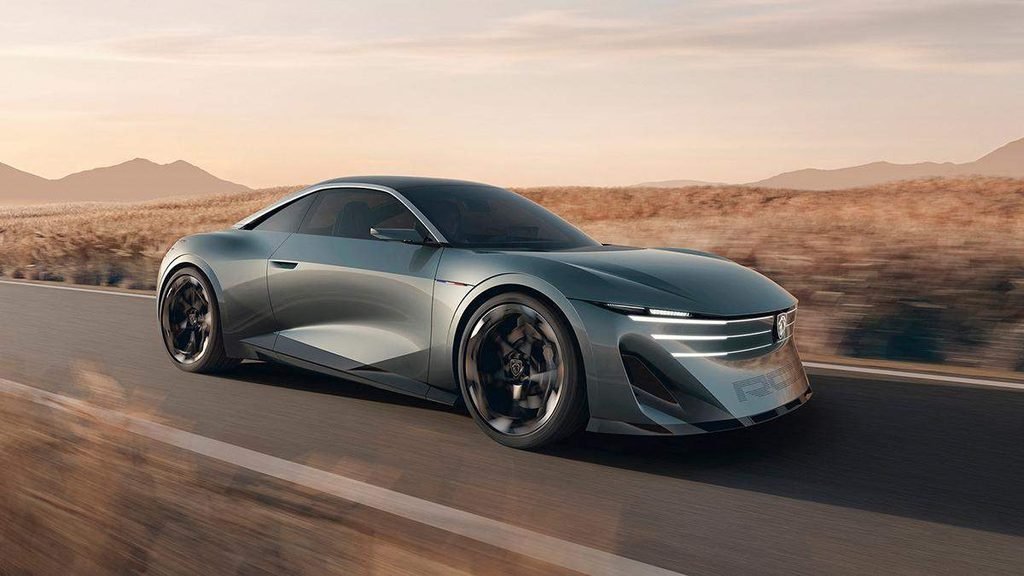
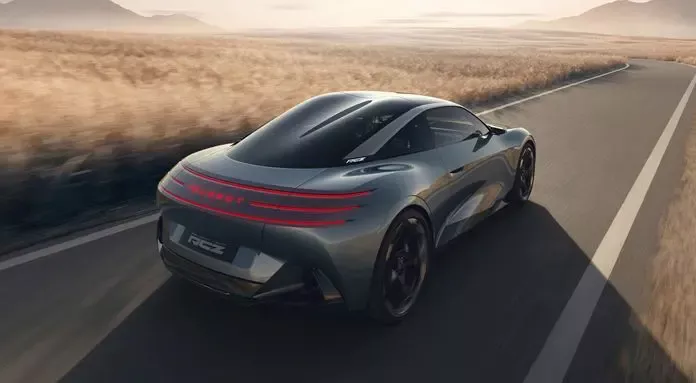
Run the arithmetic: 600 km at 11.5 kWh/100 km needs roughly 69 kWh. A 493 bhp coupé drinking less than most family hatchbacks is the whole promise of solid state — and the part furthest from a production line.
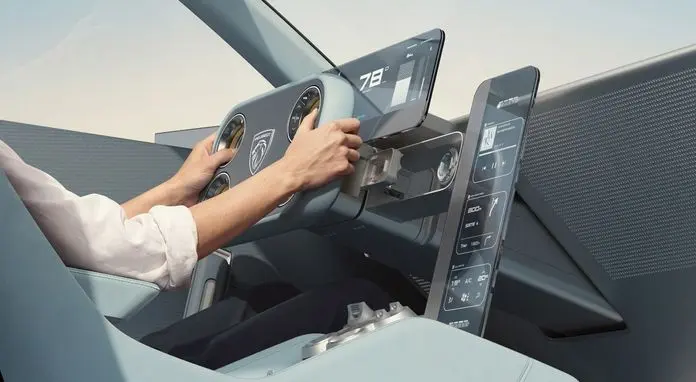
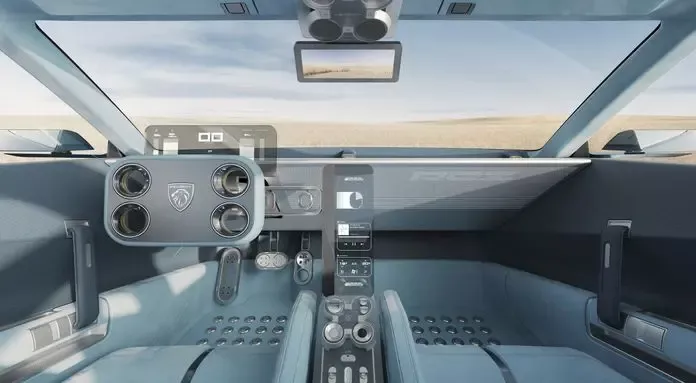
Then there is the voltage. Peugeot places the car on STLA One, the architecture Stellantis announced in May 2026 and described as an 800-volt platform spanning B, C and D segments, first cars in 2027. The RCZ Vision says 1,000 volts. Concept licence, or a roadmap Stellantis has not published? Peugeot did not say. And in a European market where electric has only just edged past petrol, the gap between a stand in Hall 4 and a car you can order is where most of these promises go to die.