
Two Volkswagen announcements, twelve days apart. On 4 September the supervisory board met in Wolfsburg and approved cutting a further 50,000 jobs. On 16 September the company pulled the covers off the most powerful GTI it has built in the badge’s fifty-year history.
It looks like a contradiction. It is not. It is the restructuring plan working exactly as designed, and the two stories explain each other better than either does alone.
What the board actually approved
The 50,000 figure is an additional cut, not a restatement. It amounts to roughly 8 per cent of Volkswagen’s global workforce as of the end of 2025, and it doubles the reductions announced since late 2024 — bringing the running total across the group to about 100,000 positions.
Because the number 50,000 has now appeared twice in twelve months meaning two different things, it is worth laying the sequence out:
- Late 2024 — agreement with IG Metall to cut around 35,000 jobs in Germany by 2030, concentrated in the VW passenger-car brand.
- March 2026 — CEO Oliver Blume writes in the annual report that “in total, around 50,000 jobs are due to be cut by 2030 across the Volkswagen Group in Germany”. The extra 15,000 come from Audi, Porsche and the software unit Cariad. Group earnings for the prior year had fallen 44 per cent to EUR 6.9 billion, the lowest since 2016.
- 4 September 2026 — the supervisory board approves “Future Plan 2030”, which adds another 50,000 cuts, this time counted globally rather than in Germany alone.
So the March number was a German total; the September number is a global increment on top of everything before it. Coverage that treats them as the same announcement is wrong, and coverage that simply adds them together is wrong in the other direction.
The targets behind the number
| Operating margin target | 9 per cent by 2030 |
| Sales target | 9 million vehicles a year |
| Model line-up | Cut by roughly 50 per cent by 2035 |
| Capital expenditure | Down 16 per cent — EUR 135 billion planned for 2027-2031 |
| European overcapacity | Around 500,000 vehicles a year, acknowledged by the company |
Four European plants were named as lacking competitive future production plans: Emden, Hannover, Neckarsulm and Zwickau. No closures were decided — Volkswagen says alternative uses will be explored — and works council representatives confirmed that compulsory redundancies remain barred through the end of 2030 under existing agreements. The cuts therefore run through early retirement, voluntary packages and simply not replacing leavers, which is slower and more expensive than closing a factory but far less explosive.
Zwickau on that list is the detail worth pausing on. Zwickau is Volkswagen’s electric plant — the site converted wholesale to the MEB platform and the home of ID.3 production. Its appearance among the four is the clearest signal in the whole announcement that the problem is not the technology but the volume: there is not enough demand to fill the capacity that was built for it.
Markets took the plan well. VW’s US depositary receipts rose 9 per cent on the day, the biggest single-day gain since March 2023.
Twelve days later: the ID.3 GTI
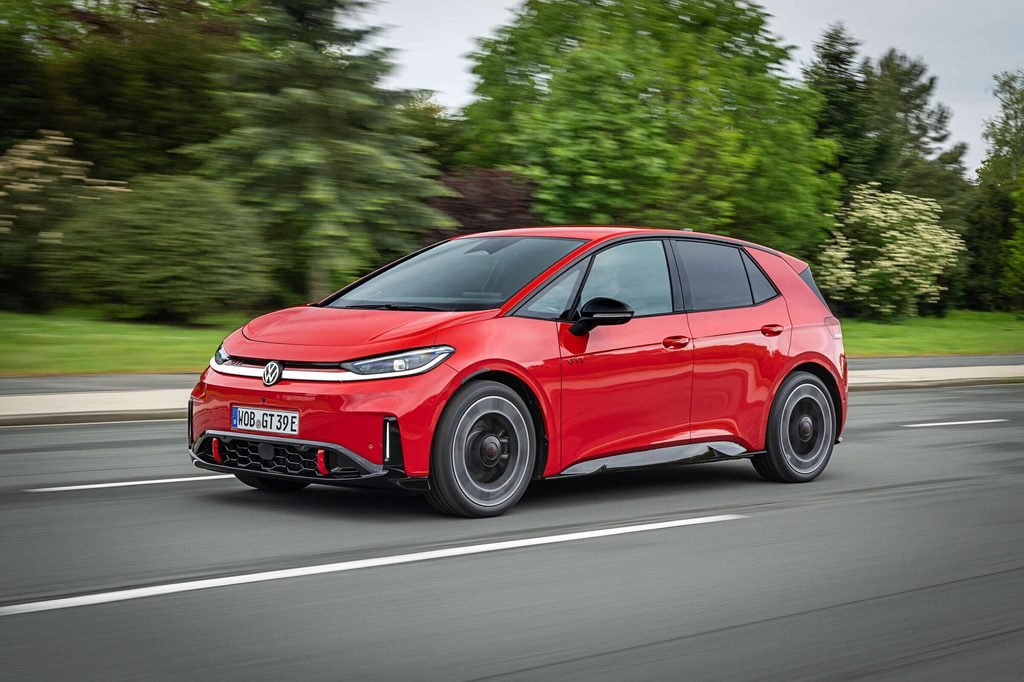
Then Volkswagen revealed the ID.3 GTI, and did something the badge has never done in fifty years: it drove the rear wheels.
| Power | 326 PS — the most powerful GTI Volkswagen has made |
| Torque | 545 Nm |
| Drive | Rear-wheel drive — a first for a GTI |
| 0-100 km/h | 5.6 seconds |
| Range | Up to 601 km |
| On sale | 2027 |
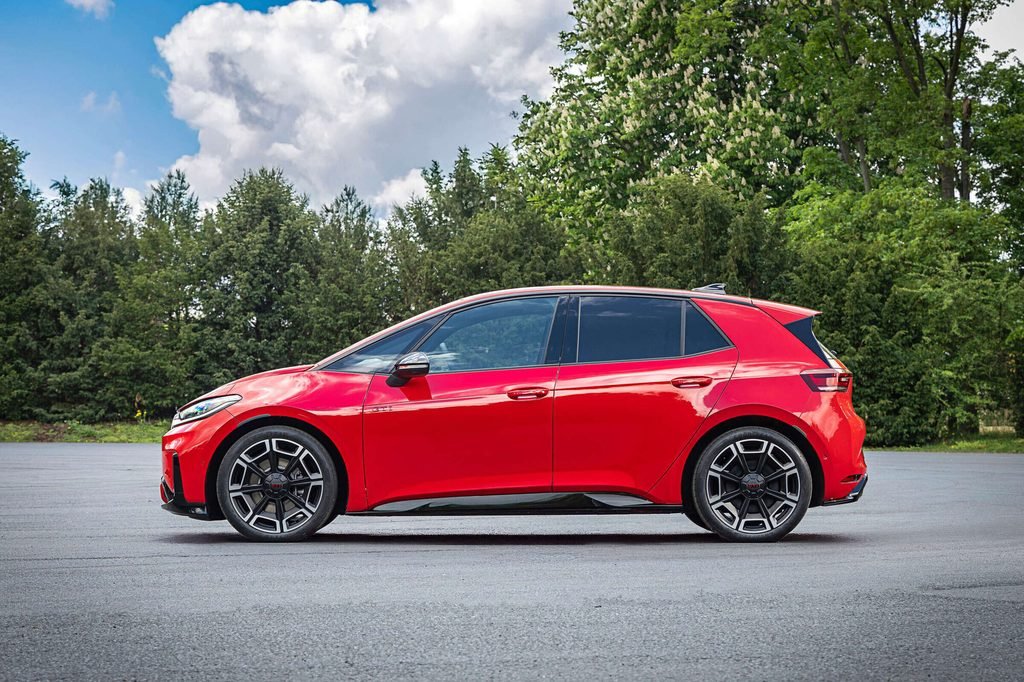
The rear-drive layout is the genuinely interesting part, and it is not a styling decision. Every GTI since 1976 has been front-driven because that is what a transverse engine over the front axle gives you, along with the torque steer and understeer that generations of engineers spent their careers disguising. An MEB-platform car puts the motor at the back. Volkswagen did not choose rear-wheel drive for the ID.3 GTI so much as the architecture handed it over — and after half a century of working around the front-drive compromise, the company now gets the layout enthusiasts always said they wanted.
Whether it feels like a GTI is a separate question that no specification sheet answers, and one nobody outside Wolfsburg can answer until cars reach roads in 2027.
Why these are the same story
Read the two announcements together and the logic is plain. Future Plan 2030 is not a growth plan — the sales target of 9 million vehicles is modest, and the line-up is to be halved by 2035. It is a margin plan: fewer models, less capital, more profit per car.
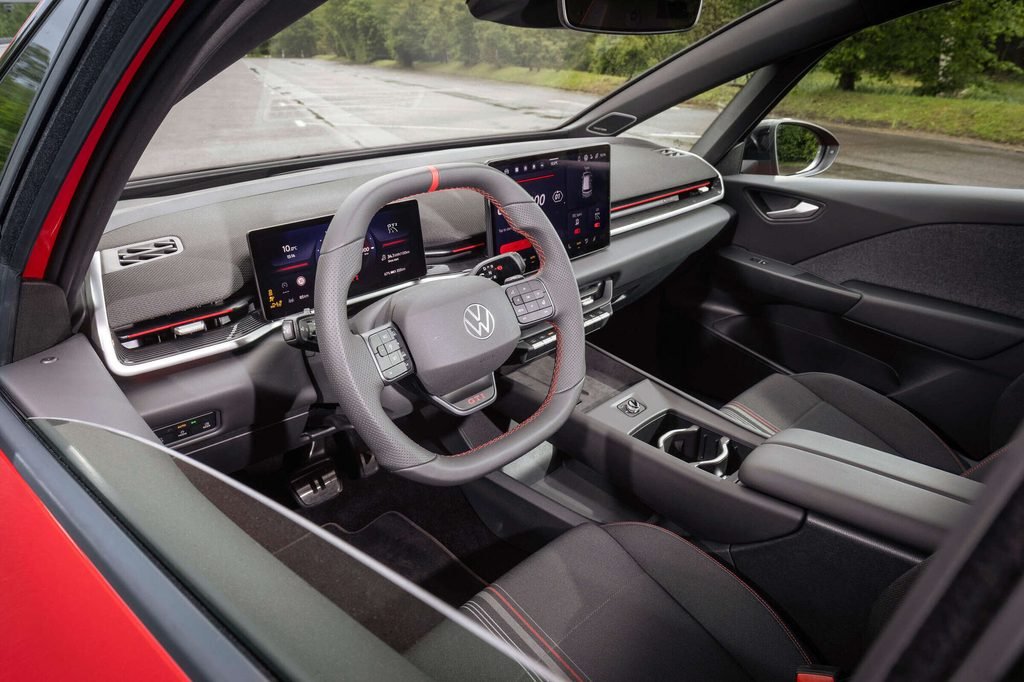
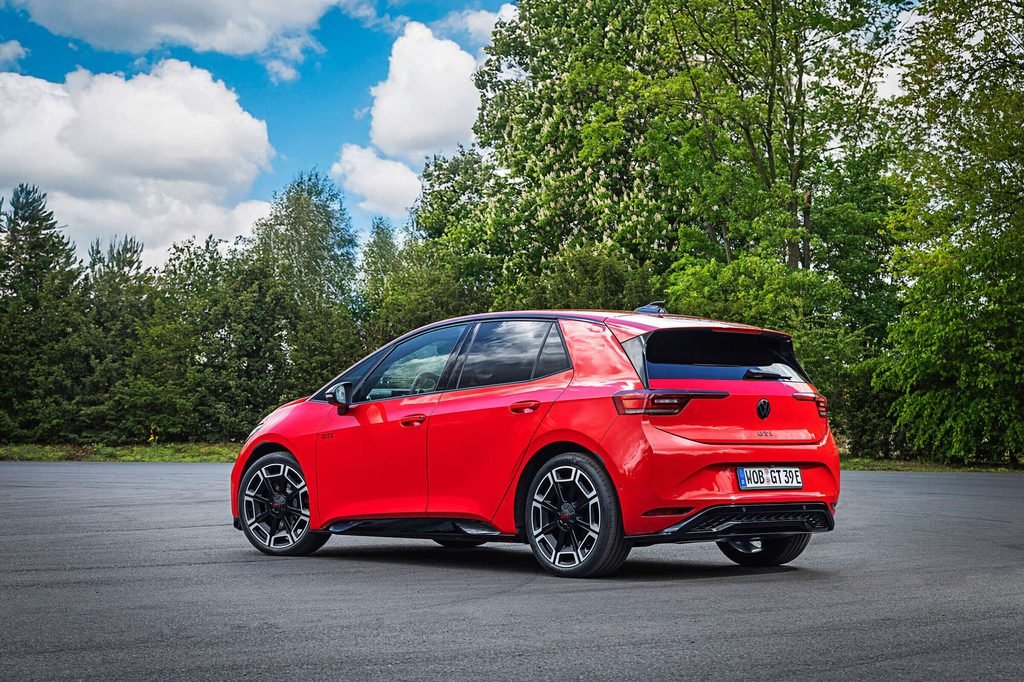
A shrinking line-up leans harder on the variants that earn the most per unit, and performance versions of existing cars are among the cheapest margin a carmaker can buy. The ID.3 GTI is not a new model. It is a new tune, a new chassis calibration and a badge with fifty years of equity behind it, layered onto a car and a platform that already exist. That is exactly the kind of product a company cutting capital expenditure by 16 per cent wants more of.
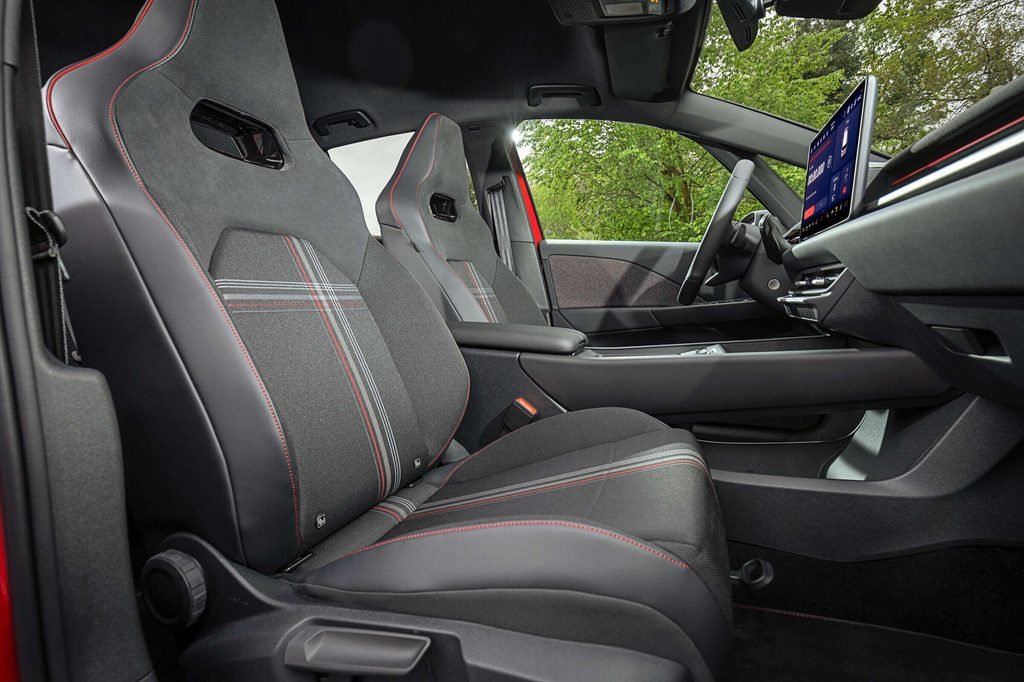
There is a second reading, and it is less comfortable. The GTI badge is one of the few assets Volkswagen owns that a Chinese competitor cannot replicate at any price — you can match the hardware, but you cannot manufacture fifty years of it. In a plan built around defending margin rather than chasing volume, leaning on heritage is not nostalgia. It is strategy.
What to watch
The number that matters over the next year is not 50,000. It is whether the four named plants find work. Volkswagen has committed to no compulsory redundancies until the end of 2030 and has not decided to close anything, which leaves Emden, Hannover, Neckarsulm and Zwickau in a holding pattern: no closure, no confirmed future product either.
For anyone buying a Volkswagen, none of this changes the car in the showroom. For anyone reading the industry, it is the clearest statement yet of where Europe’s largest carmaker thinks the next decade goes — smaller, dearer, and trading harder on the badges it already owns.