
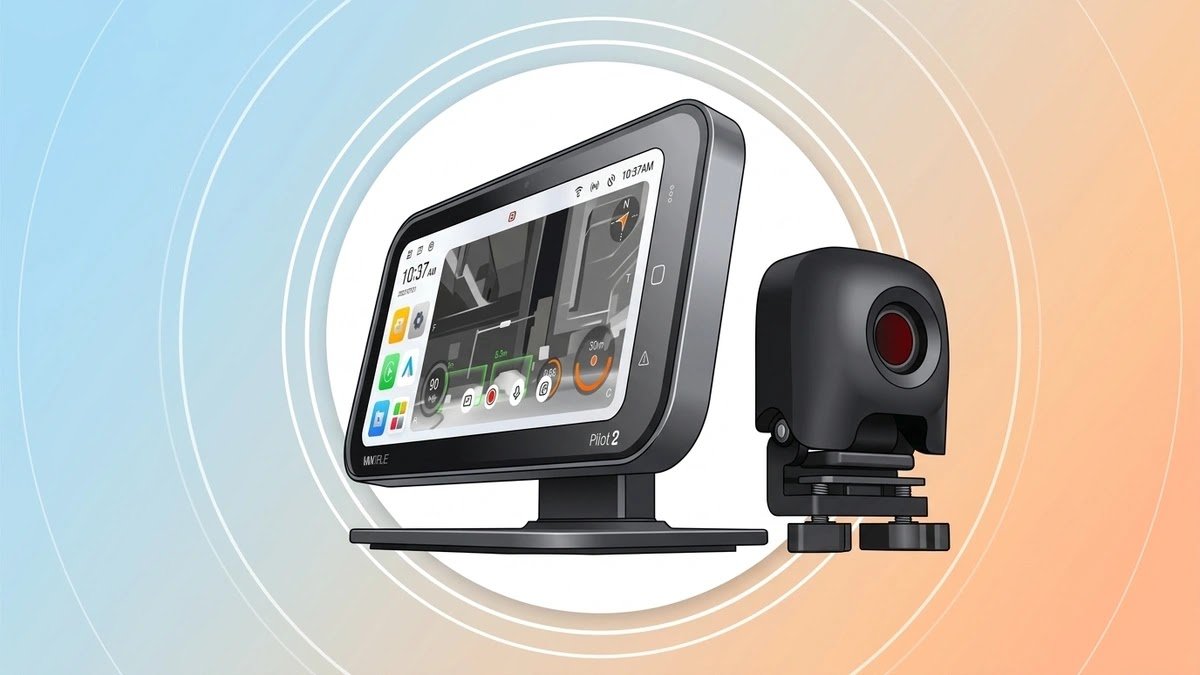
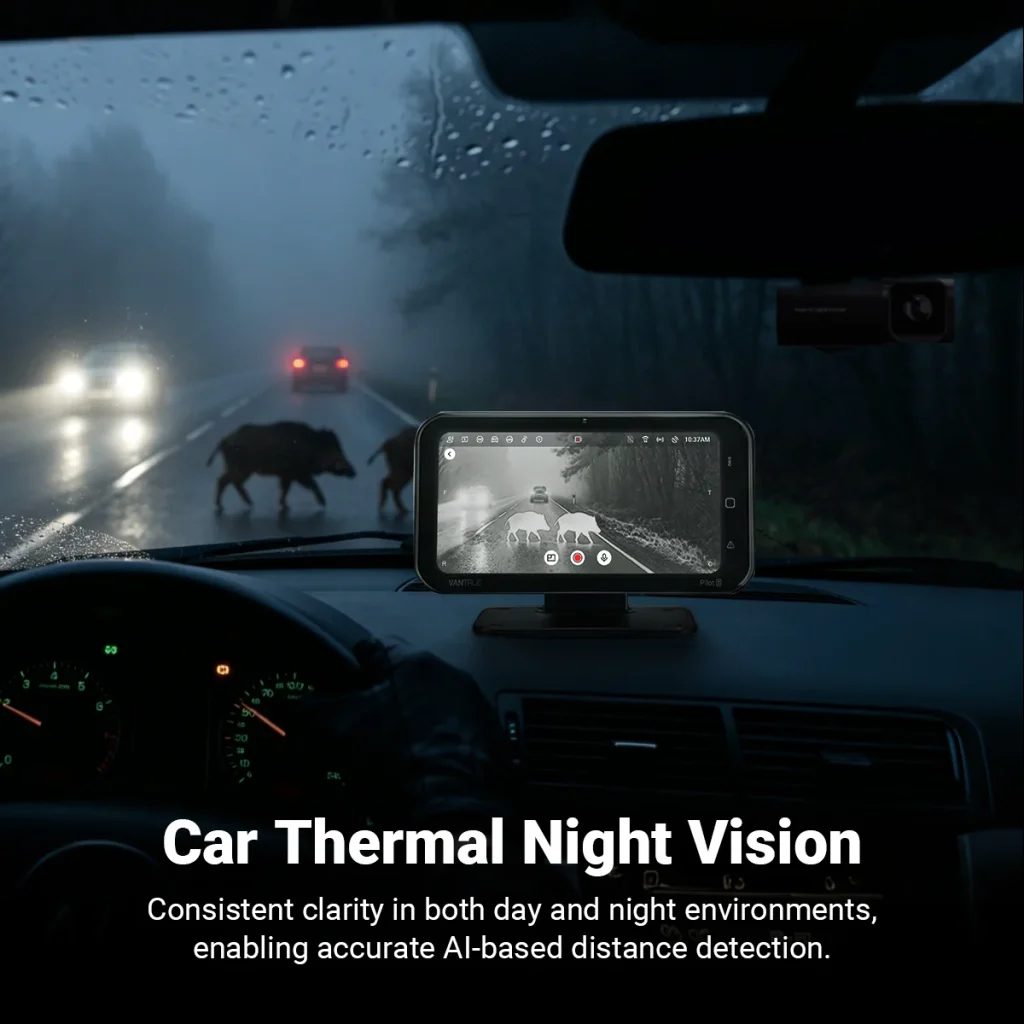
The Vantrue Pilot 2 is a four-channel dash cam with a feature nothing else in the category has: a thermal imaging camera that sees heat rather than light, and therefore sees a deer standing in an unlit road well before your headlights do.
It is a genuinely interesting idea, and it works. It also carries one consequence that nobody selling it leads with, and that consequence decides whether this product makes sense for you.
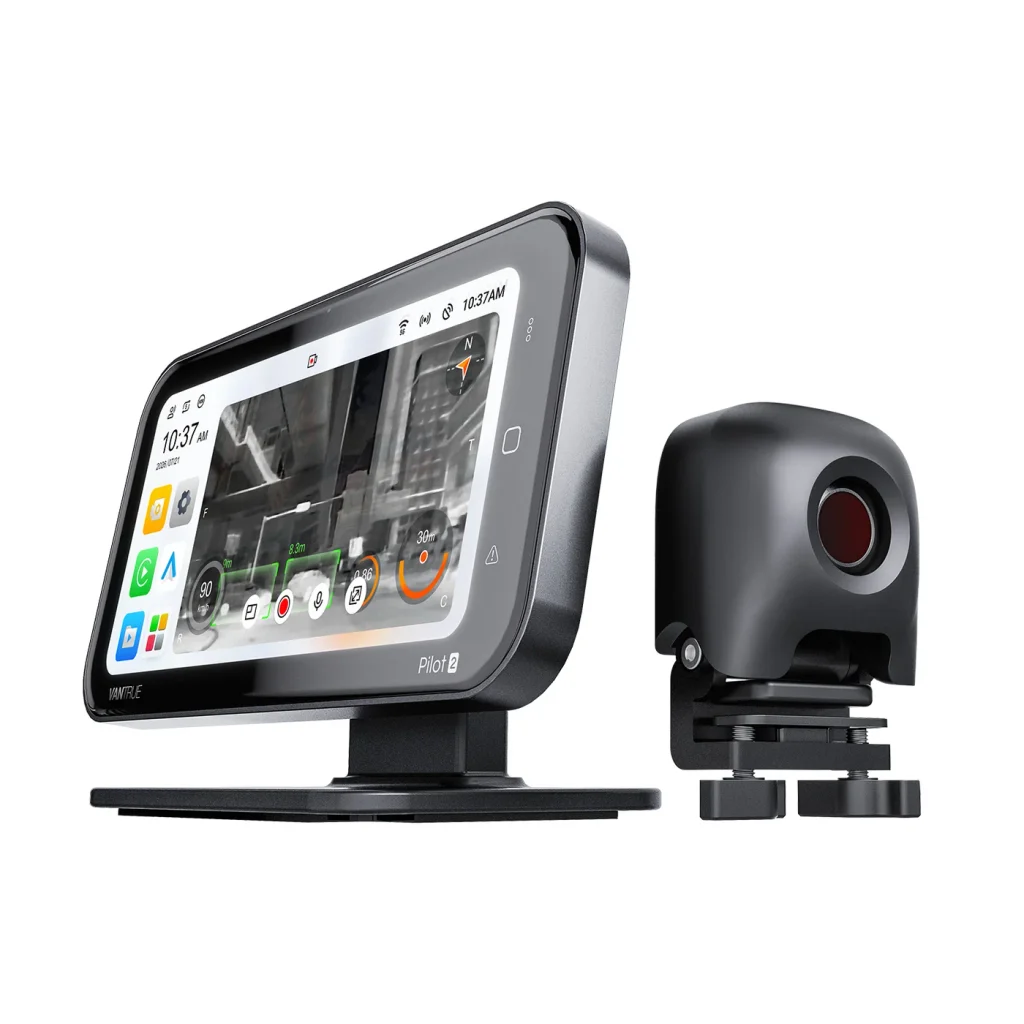
The thermal camera has to live outside your car
This is physics, not a design choice. Thermal cameras cannot see through glass.
A thermal sensor works in long-wave infrared, at wavelengths roughly twenty times longer than visible light. Ordinary glass is opaque at those wavelengths — your windscreen is, to a thermal camera, a solid wall. It is why thermal optics are made from germanium rather than glass, and why a thermal lens costs what it costs.
So unlike every other camera in this kit, the thermal unit cannot sit behind the windscreen. It mounts outside the vehicle — clamped to the hood or, as both independent reviewers ended up doing, tucked into the front grille. Which in turn explains the IP67 rating, the long cable run, and why installation is the recurring complaint in every review of this thing. The full kit ships with over thirty feet of cabling, including a twenty-foot rear camera lead.
Budget for professional installation, or for an afternoon with trim tools and a willingness to route a cable through the engine bay.
Two seconds, not four
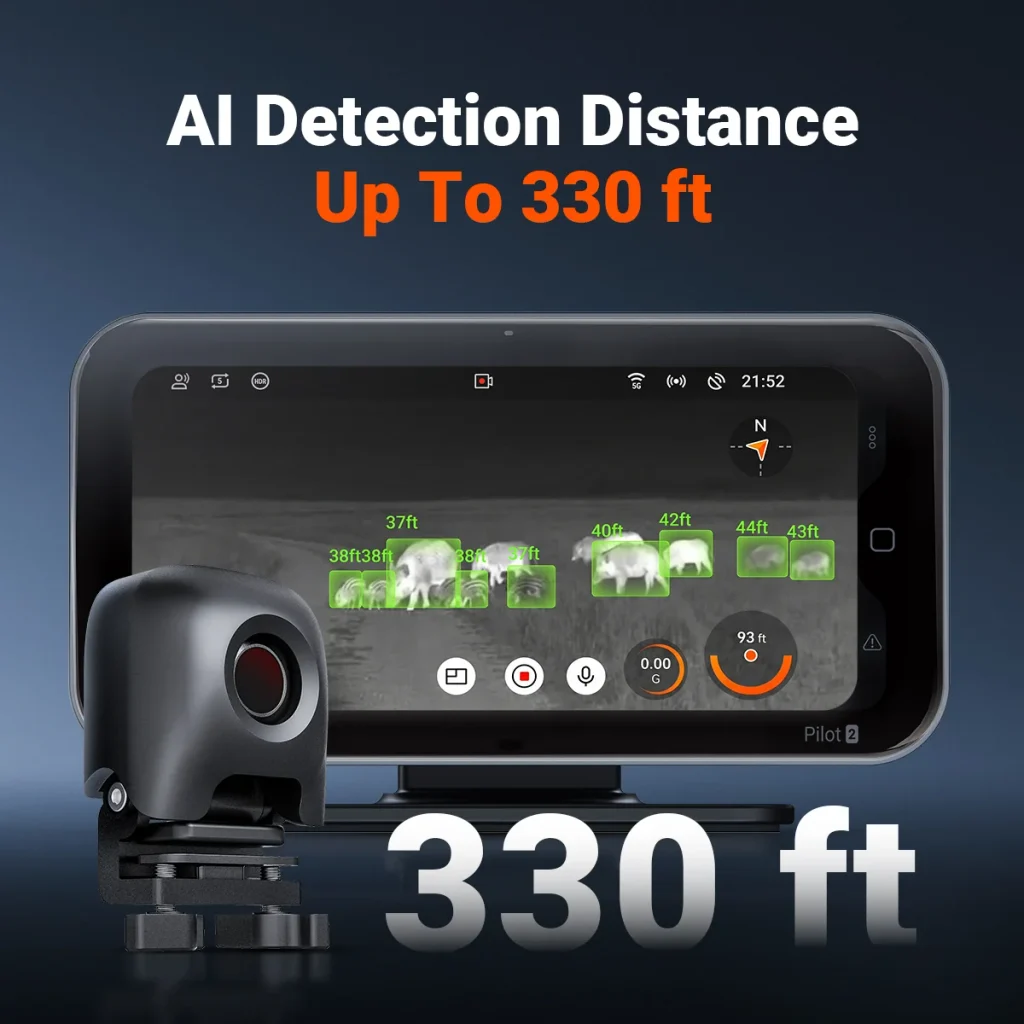
Vantrue advertises thermal detection at up to 330 feet — 100 metres. Two independent reviewers, testing separately, both measured closer to 200 feet, around 61 metres.
That gap matters more than it sounds, because what you are actually buying is time. At 60 mph you cover 88 feet every second:
- At the claimed 330 ft: about 3.7 seconds of warning.
- At the measured 200 ft: about 2.3 seconds.
Average human reaction time to an unexpected hazard runs around 1.5 seconds before the brakes even begin to work. Two and a bit seconds is still useful — it is the difference between braking and not braking at all. But it is not the comfortable margin the marketing number implies, and anyone buying this specifically for rural night driving should calibrate their expectations to the smaller figure.
There is a second inconsistency worth flagging. On the thermal camera’s field of view, Vantrue’s own materials quote 40° by 30° in one place and 60° in another, while one reviewer measured what he judged closer to 80°. When a manufacturer’s own published figures disagree with each other, treat all of them as approximate.
What the four channels actually are
| Channel | Sensor and optics | Records at |
|---|---|---|
| Front | Sony IMX675 Gen 2 Starvis, 5 MP, f/1.8, 158° | 1440p / 30fps |
| Rear | Sony IMX675, f/1.8, 160° | 1440p / 30fps |
| Cabin | Sony IMX662 Gen 2 Starvis, 2 MP, 165°, four IR LEDs | 1080p / 30fps |
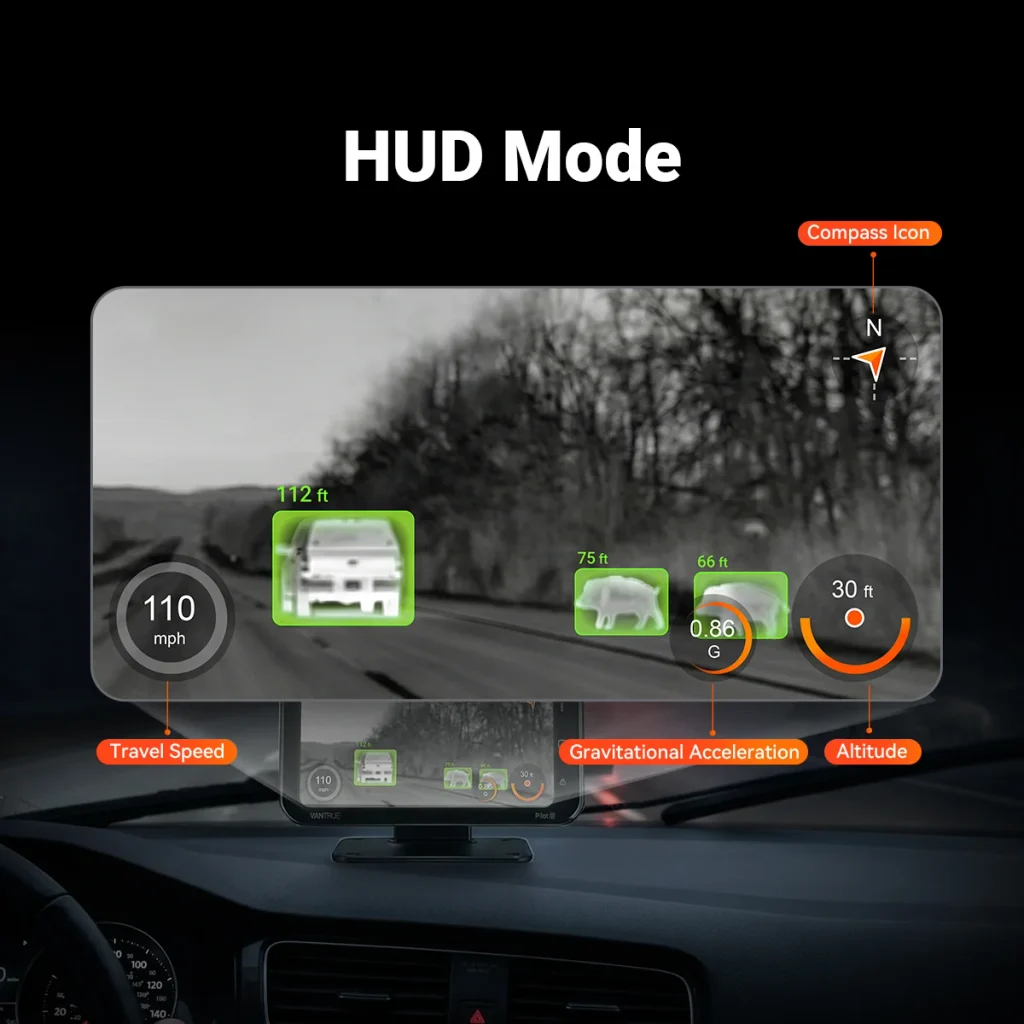
| Thermal | 256 × 192, IP67, external mount | Overlay with AI detection boxes |
Everything runs through a separate 6.25-inch IPS touchscreen at 1560 × 720, which is the system’s hub rather than an accessory — it is where you review footage, and it is what runs CarPlay and Android Auto. Recording is H.265 in MP4. Storage is 128 GB built in, expandable by microSD to 1 TB. There is Wi-Fi 6, Bluetooth, USB-C, a 3.5 mm jack and a 1.5 W speaker. Operating range is -20 °C to 60 °C.
Note the “360° night vision” in the product name. The three conventional cameras between them cover front, rear and cabin, and the thermal camera looks forward through a narrow cone. Nothing here gives thermal coverage in 360 degrees.
What testers found
Two detailed independent reviews exist, and they converge on the same picture.
The thermal camera is the real thing. It picks up heat signatures well beyond headlight reach, the AI overlay draws boxes around what it finds, and false positives were described as few — notably better than a rival thermal unit one reviewer had tested, which flagged fire hydrants, traffic cones and a lighthouse as people. The hardware survived repeated rainstorms, and two months of Texas Gulf heat caused no problems.
The conventional cameras are good but not class-leading. Front and rear footage is sharp with readable plates. One reviewer pointed out that the forward camera is actually a step down from Vantrue’s own Nexus 5S, which records at 1944p against the Pilot 2’s 1440p — you are paying more for thermal and getting slightly less conventional resolution.
CarPlay was the weak point. On preproduction units it was called “a little crashy” and “an afterthought”, and one reviewer could not evaluate Android Auto at all because it was unfinished. Both tested pre-retail hardware, so this may have improved — but it is not what you buy this for, and it should not be the reason you choose it.
Other noted gripes: the 1560 × 720 screen is unremarkable, the speaker is tinny, the thermal display defaults to a “white hot” palette with no easy alternative, and the built-in parking assist was slower and less sensitive than the car’s own factory system. One reviewer running a hardwired setup had to jump-start his car after about ten days, though he suspected an already-tired battery.
Where it earns its money — and where it does not
This is the clearest finding in the independent coverage, and it is a geography question rather than a hardware one.
Rural and night driving: this is the case the product was built for. Unlit roads, animals, a pedestrian in dark clothing at the edge of a verge — all of them are warm objects against a cold background, which is exactly what a thermal sensor is good at. If you regularly drive unlit roads after dark, the extra seconds are worth real money.
City driving: considerably less so. An urban street is full of warm bodies, warm engines and warm exhausts, and a detection system in that environment alerts constantly. A warning that fires every few seconds stops being a warning — drivers learn to ignore it, which is worse than not having it. One reviewer concluded plainly that city drivers should buy the cheaper Nexus 5S instead and skip thermal entirely.
A note on the price
The Pilot 2 began life as a crowdfunding campaign, and its pricing has moved a great deal. Early-bird tiers were quoted at $399 and $449; MSRP appeared as $799 in one review and $899.99 in another, with a pre-sale at $649.99. Vantrue’s own product page currently lists it at $449.99.
That spread is normal for a product transitioning from Kickstarter to retail, but it means any price you see quoted in a review is probably stale. Check the current figure rather than the one in an article — including this one.
The verdict
Buy it if you drive unlit roads at night, regularly, and you are prepared for a real installation with a camera mounted in your grille. For a rural commuter, a rideshare driver working late, or anyone who has already hit a deer once, the thermal channel does something no amount of megapixels can.
Skip it if you mostly drive in town, if you want the sharpest possible forward footage for its own sake, or if you were drawn in by the CarPlay line on the box. In those cases a conventional three-channel camera does the job better for less, and Vantrue makes one.
Read next
NOTE We could not find a dedicated Amazon listing for the Pilot 2 — this goes to the manufacturer’s own page. We do not currently earn a commission from this link.