
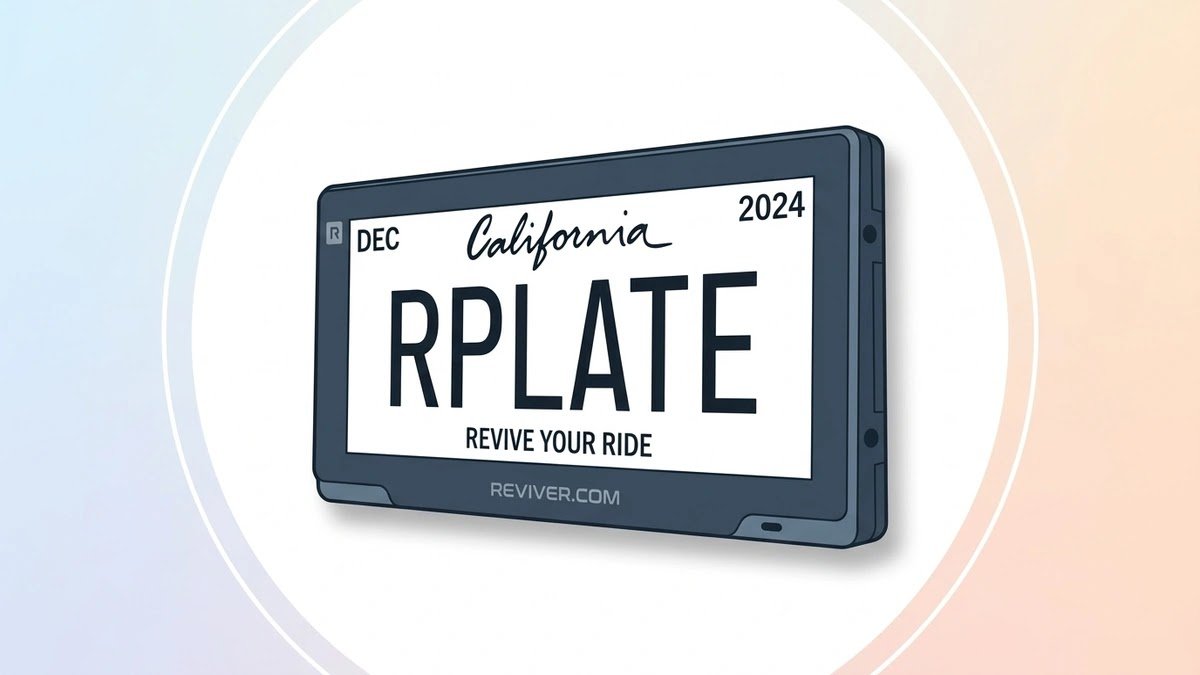
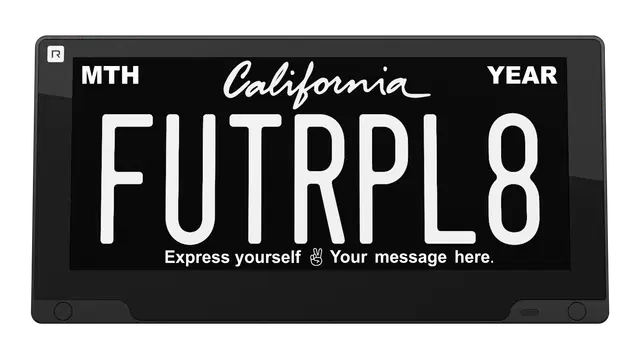
The Reviver RPLATE replaces the stamped metal rectangle on your car with a connected display. It shows your plate number as usual, but it can also switch between light and dark modes, carry a personalised banner underneath the number, flash a stolen-vehicle message if the car is taken, and let you renew your registration from a phone app instead of a queue at the DMV.
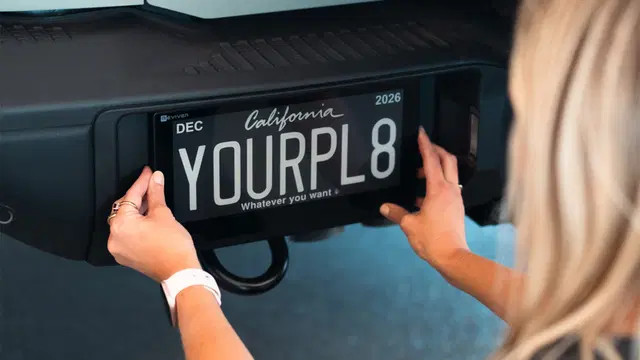
It has been on sale in the United States for several years now, and it is one of those products where the interesting questions are not about the hardware. They are about where you are allowed to use it, what it costs once the subscription is included, and what happens to a screen bolted to the back of your car when the billing stops.
Where you can actually register one
This is the gate that stops most of the conversation, so it belongs first. As of writing, Reviver’s own availability page lists exactly two states where you can register an RPLATE: California and Arizona.
Seven more are listed as pending or in progress — Colorado, Texas, Illinois, Michigan, Georgia, Florida and Nevada — but pending is not the same as available, and some of those have been pending for a while. Reviver states that once a plate is registered in an approved state, it is legal to drive with anywhere in the US and across North American borders. That is the normal way vehicle registration works: your plate is governed by the state that issued it, not the state you happen to be driving through.
The practical translation: if your vehicle is not registered in California or Arizona, this product is not currently available to you, regardless of where you live or drive.
What it actually costs
The sticker price is not the price. An RPLATE is a piece of hardware plus a mandatory ongoing service plan, plus your normal state registration fees, which do not go away.
| RPLATE hardware | $899, including 60 days of service |
| Essential plan | $35/year — digital tags, theft reporting, basic display modes |
| Plus plan | $75/year — adds free registration renewal, up to 12 custom messages, free battery replacement |
| Premium plan | $125/year — unlimited messages, free ownership transfers |
| Replacement battery | $39 (free on Plus and Premium) |
| In-app registration renewal | $39 (included on Plus and Premium) |
| Clear suspended registration | $25 (included on Premium) |
| Temporary smog exemption | $15 (included on Premium) |
Plan prices are the California figures and vary by state. State registration fees are separate and go to your DMV, not to Reviver.
One number is worth flagging because it moved. In October 2024 Reviver issued a press release announcing a price reduction to $499, quoting its founder calling it “a pivotal moment”. As of writing, the shop lists the RPLATE at $899. We have no explanation for the difference and Reviver has published none — it may have been promotional — but if you saw the $499 headline at the time, the current number is not that.
What happens if you stop paying
Reviver’s own help documentation answers this plainly, and the answer is the single most important line in the whole product: if the service plan expires, “the plate will continue displaying the last valid image it received, but it will no longer update or support connected features.”
So it does not go blank and it does not become illegal overnight — it freezes. Which is fine right up until your registration renews and the frozen image no longer matches your actual registration status. At that point the $899 screen on the back of your car is displaying stale information about a legal document, and you are back to sorting it out with the DMV. Budget the subscription as permanent, not optional.
The hardware itself runs on a replaceable battery the company rates at up to four years, with Bluetooth Low Energy and LTE for connectivity, and ships with an anti-theft mounting bracket.
Two security findings worth knowing about
A connected licence plate is a computer attached to a legal document, and researchers have gone after it twice. Both findings are public and both are worth weighing before you spend the money.
January 2023 — account-level access. A group of security researchers reported obtaining super-administrator access to Reviver’s back-end systems, which they said would have allowed tracking the GPS location of every digital plate on the platform, along with user account information. The finding was widely reported at the time and was disclosed to the company.
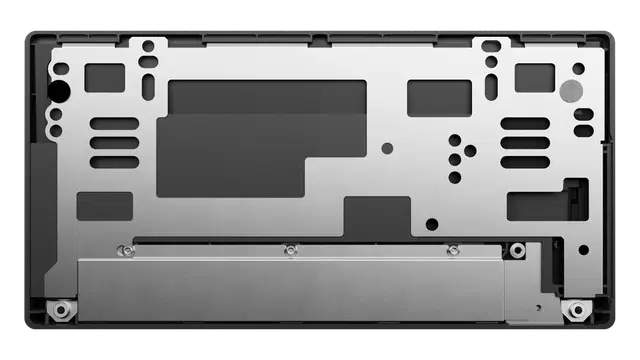
December 2024 — hardware jailbreak. Josep Rodriguez of the security firm IOActive demonstrated a physical attack: peel back a sticker on the rear of the plate, connect to internal contacts, and rewrite the firmware in minutes. A modified plate would then accept Bluetooth commands from a phone and display any characters or images the owner chose — which in practice means displaying someone else’s number to dodge tolls and camera tickets, or a fake number entirely. Rodriguez’s assessment was the uncomfortable part: because the weakness sits in the chips themselves, he said it cannot be patched remotely and would require physically replacing hardware in the roughly 65,000 plates then sold.
Reviver published a general security statement in January 2025 saying it continually reviews its products, that customer and DMV data are protected by its encryption standards, and that its GPS plates are “not Bluetooth-connected, ensuring location data remains secure”. The statement does not address either research finding specifically. We also note that the consumer RPLATE product page lists Bluetooth Low Energy alongside LTE; we could not reconcile that with the quoted line from the public materials, and the company may be drawing a distinction between product variants that it has not spelled out.
What this does and does not mean for a buyer: the jailbreak requires physical access to the plate, so it is not something a passing stranger does to your car — it is a fraud route for a plate’s own owner, and the risk it creates for you is regulatory rather than personal. The 2023 finding is the one that touched owners directly, and it was a platform issue rather than a flaw in the device on your bumper.
Who it is for
It makes the most sense for a California or Arizona driver who genuinely dislikes the registration renewal process, who likes the idea of the plate as a surface for personalisation, and for whom roughly $900 up front plus $35 to $125 a year forever is not a meaningful sum. Fleet operators are a separate case entirely — automated renewal across dozens of vehicles is a real administrative saving in a way it is not for one car.
For everyone else the arithmetic is hard to escape. A metal plate costs a few dollars, never needs a battery, cannot be jailbroken, does not stop working when a company changes its billing, and does not depend on that company still existing in ten years. The RPLATE is a genuinely clever piece of engineering solving a problem most drivers encounter once a year for twenty minutes.
Read next
NOTE The RPLATE is not sold on Amazon — it is a registered licence plate and is sold direct by Reviver and through approved dealers. This link goes to the manufacturer’s store. We do not currently earn a commission from it.