
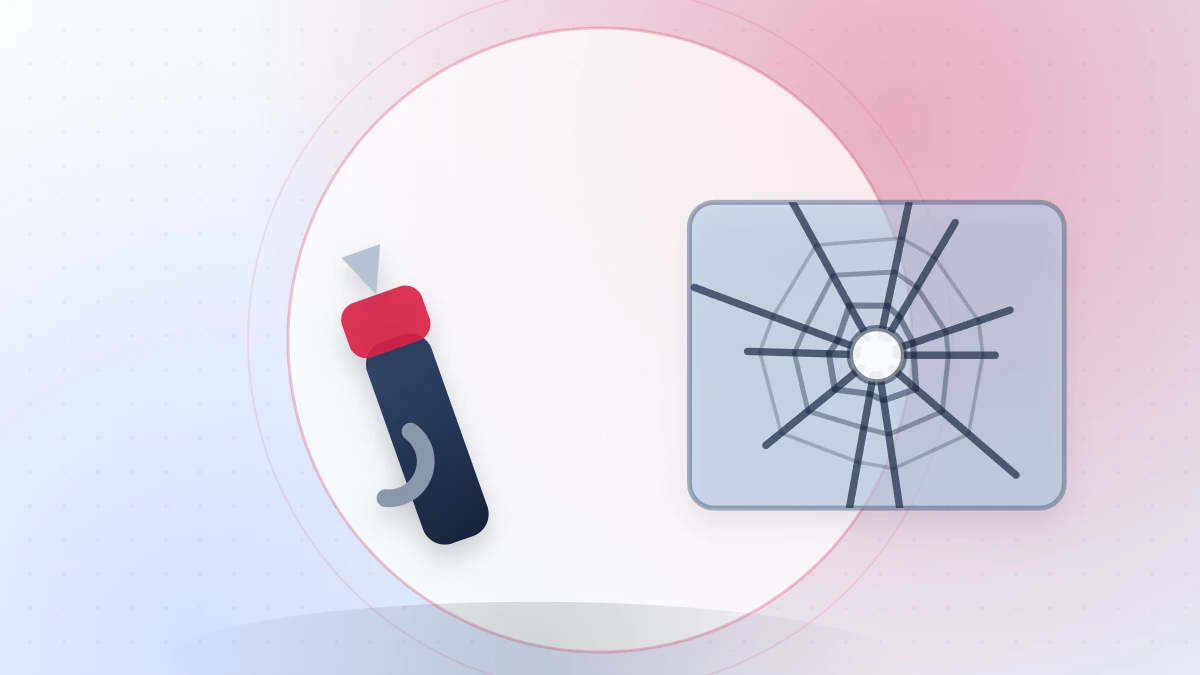
Escape tools are cheap, small, and almost never tested by the people who carry them. They also depend entirely on a property of your specific car that many owners have never checked.
Two kinds of glass, two completely different outcomes
Tempered glass is heat-treated so that it shatters into small blunt granules under a sharp point load. This is what side and rear windows have traditionally been made from, and it is what every escape tool is designed to break. A spring-loaded punch defeats it instantly, with almost no force.
Laminated glass is two layers of glass bonded to a plastic interlayer. It is what every windscreen is made from, and — this is the part that matters — it is increasingly used for side windows as well, for security, noise reduction and occupant retention.
A punch or hammer will not get you through laminated glass. It will crack, star, and stay in the frame. No consumer escape tool reliably defeats it.
Check your own car now. Look at the bottom corner of each side window. The etched marking usually states the glass type; “laminated” or “LAMISAFE” and similar wording means an escape tool will not work on that window. Some cars have laminated fronts and tempered rears.
If every side window in your car is laminated, an escape tool is not the right plan and it is better to know that in a car park than in water.
Spring-loaded punch versus hammer
Spring-loaded punches are the better design for most people. You press the tip against the glass and an internal spring releases a hardened point. They need almost no strength, no swinging room, and work while restrained or upside down.
Hammer-style tools need space to swing and enough force behind them. In an inverted or submerged car, in the dark, with an inflated airbag in the way, that space and force often do not exist.
Either way, aim for a corner of the window, not the middle. The centre flexes; the edges are held and shatter more readily.
The belt cutter is the part that gets used most
A jammed or loaded seatbelt buckle is a far more common problem than a window that will not open, and the cutter is the half of these tools that most often earns its place.
Look for a recessed, guarded blade — a shielded hook you pull across the webbing. Exposed blades cut people during the fumbling that precedes their use. Test it once on an old strap so you know the angle and how much force it takes.
Where you keep it decides whether it exists
An escape tool in the glovebox is unreachable if the car is on its side, and an escape tool in the boot does not exist at all.
Sensible locations: attached to the driver’s seat base, in the driver’s door pocket, or on the key ring for the smallest models. It needs to be reachable with one hand, while belted in.
Mounted tools with adhesive brackets fall off in summer heat. Check yours occasionally.
What to buy, briefly
- A spring-loaded punch rather than a hammer.
- With a guarded belt cutter.
- Mounted within reach of the driver’s seat.
- Plus a second one for rear passengers in a family car.
- Tested once, so you know how it feels.
And if your side glass is laminated, spend the money on a plan instead: know how to open the doors after a collision, keep the vehicle’s emergency procedures in mind, and understand that the practical escape route in most modern cars is a door, not a window.
*This is general information, not emergency training. In any real incident, contact the emergency services and follow their instructions.*