
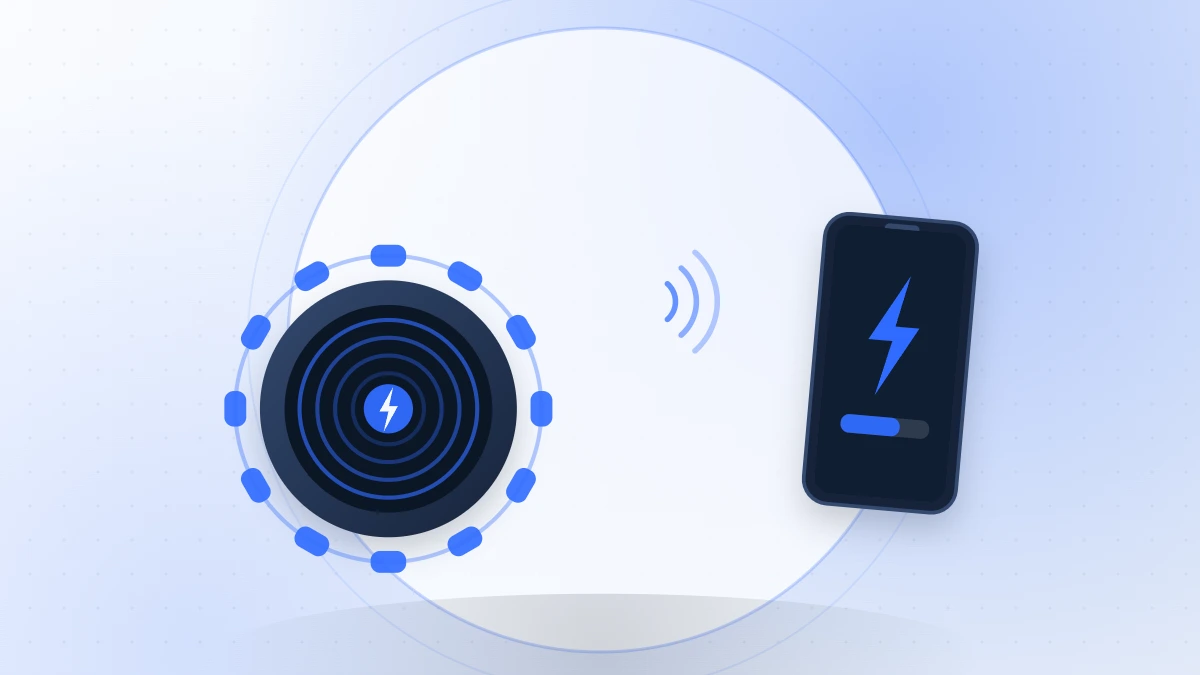
Wireless charging in cars had a persistent problem that more power never solved: alignment. Qi2 addressed it mechanically, and the effect on in-car charging has been larger than the specification sheet suggests.
What Qi2 added
Qi2 is the Wireless Power Consortium’s update to the Qi standard, developed with a magnetic attachment profile contributed from Apple’s MagSafe design. The headline addition is the Magnetic Power Profile: a ring of magnets that aligns the transmitter and receiver coils automatically.
The baseline power level remains modest — 15W for the magnetic profile — and later revisions of the standard have raised the ceiling. But power was never the interesting part.
Why alignment mattered so much in a car
Inductive charging efficiency depends heavily on coil alignment. Misalignment does not simply slow charging; it converts a larger share of the transferred energy into heat, in a phone that is already sitting in a warm cabin.
In a house, a phone is placed carefully on a pad and left alone. In a car it is placed one-handed, at a junction, without looking, on a surface that then vibrates for an hour. Before magnets, that meant:
- Charging that started well and degraded as the phone crept out of position.
- Motorised clamps guessing at coil location based on where they happened to grip.
- Phones that arrived at the destination warmer and no more charged than when they left.
Magnetic alignment removes the variable entirely.
What it means when buying a car mount
- Look for explicit Qi2 or MagSafe compatibility. Many products are plain Qi pads with decorative magnets, which align only approximately.
- The phone needs magnets too. A handset with a built-in ring works immediately; anything else needs a magnetic case or an adhesive ring. A thick non-magnetic case defeats the mechanism.
- The power supply is usually sold separately. A 15W pad needs meaningfully more than 15W of input because conversion is lossy. Most mounts expect a 20W to 30W USB-C PD source.
- Heat still wins in summer. A magnetically aligned phone in direct sun on a windscreen will still throttle. Position matters more than the pad.
Wireless charging remains less efficient than a cable. Qi2 narrows the gap and removes the alignment lottery; it does not eliminate the physics.
The wider effect
Because the magnetic profile is part of an open standard rather than one manufacturer’s design, accessory makers can build to it directly. That has made magnetic mounts the default rather than a premium feature, and it has quietly killed a generation of motorised clamps that existed mainly to solve alignment.
For drivers, the practical advice is short: if you want wireless charging in the car, buy into the magnetic ecosystem properly — phone or case, mount, and a proper PD power source — or use a cable. The half-way options are where the disappointment lives.